
Crazy.

Let me paint you a picture of “crazy.”
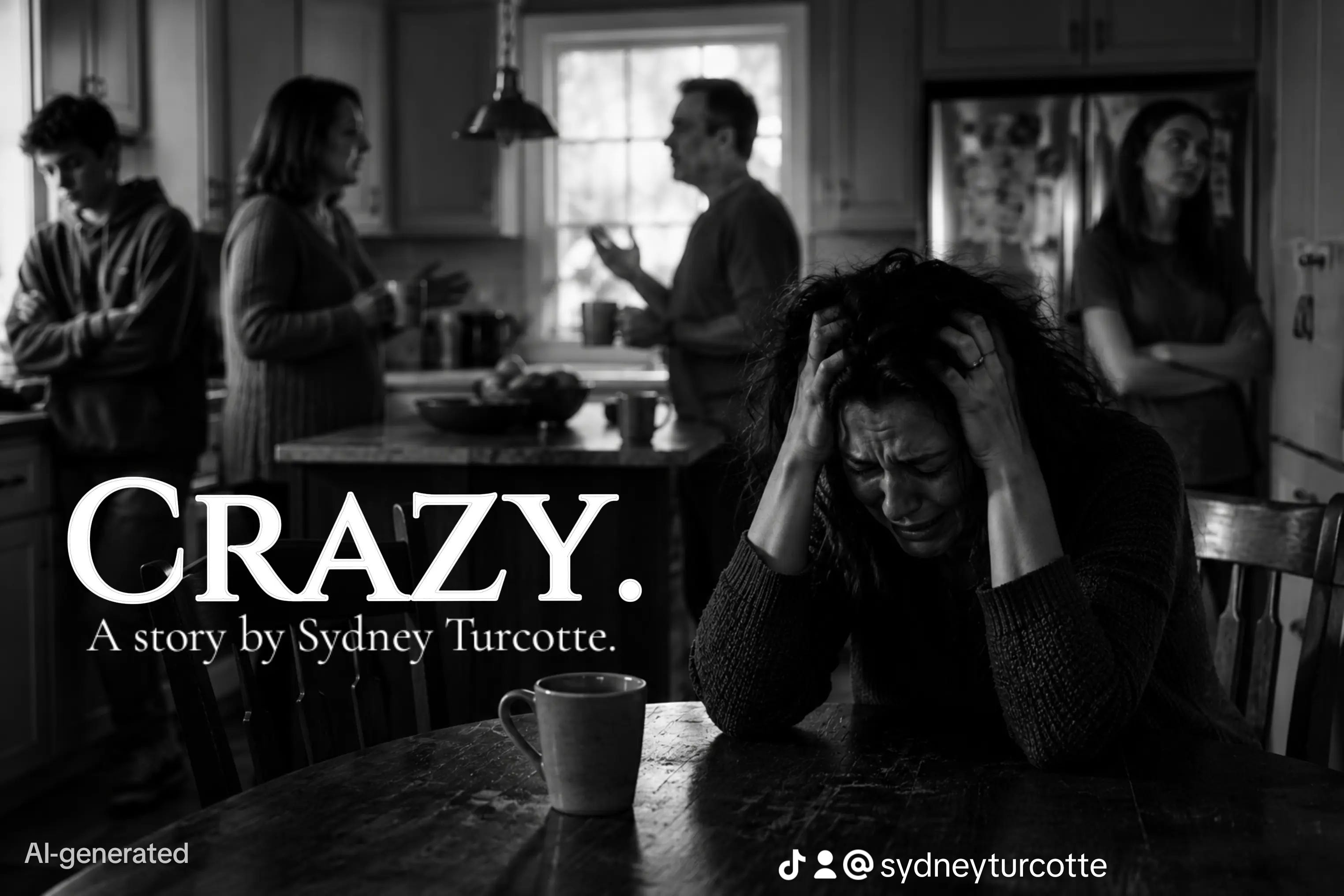
But first, let’s get comfortable calling trauma what it often is.
Abuse.
Yes, people can be traumatized by war, accidents, surgeries, loss, and violence. But abuse causes trauma too. And we soften it into digestible language because reality is just too uncomfortable for the masses.
And let’s define something important.
Conflict is not abuse.
All relationships have conflict. People hurt each other.
But when harm happens and there is no reflection, no accountability, no repair. That's when harm becomes abuse. Because if someone hurts you and repairs it, accountability and love... exist.
Repair restores reality, and denial fractures it. And for a child? The repeated impact is seismic. Because children will almost always choose self-blame over losing parental attachment.
Now imagine being harmed repeatedly over years. Imagine the people hurting you deny it. Then imagine the people who knew also deny it. Your reality is questioned. Your innocence is lost. And your healthy reaction becomes evidence against you.
Because now the reaction is the crime.
You are:
“Too emotional.”
“Crazy.”
“Difficult.”
"Mentally ill.”
“The Problem.”
And with nowhere left to turn, you blame yourself. You must be mentally ill. Because if your reality is wrong… Then you must be the problem. And mental illness is always random or genetic.
Right?
Becauae that's what many of us were taught.
We often talk about victims blaming themselves, but rarely do we explain the mechanism.
Abuse is not always bruises. Sometimes it is emotional, abandonment, and sometimes it is watching people who could have helped do nothing.
Random or genetic causes of mental illness make it easier to judge reactions to abuse without context. Meaning it's far easier to accept a label or swallow a pill than say, someone harmed me and refused repair.
Or worse I was abused.
But how are we ever supposed to stop harm without evaluating logical context?
Many symptoms we pathologized have roots in environment, attachment, denied harm, and grief more than we once understood.
Moncrieff et al. (published July 2022, Molecular Psychiatry) debunked the serotonin deficiency explanation for depression.
The ACE study linked childhood adversity with increased risk for depression, suicidality, substance use, chronic illness, and emotional dysregulation.
Emerging work continues to show trauma, adversity, attachment injury, neglect, and chronic stress can produce symptoms that overlap with most all known mental health disorders.
Does this prove every struggle is abuse? No. But it asks a harder question.
"What happened?"
But wait now that we asked that...
Riddle me this.
When survivors leave abusive families, cults or domestic violence, why does safety change symptoms?
Why do survivors of abuse often report less fear, less depression, less anxiety, less chaos, less self-blame, and more quality of life after they get away and begin to rebuild?
Why do people who leave cults, abusive families, coercive relationships, and high-control environments often start realizing:
“I was not crazy. I was trapped.”
Maybe the symptom was never the whole story.
Maybe the symptom was not the defect.
Maybe it was the alarm.
Maybe the anxiety was information.
Maybe the depression was heartbreak after years of denied harm and unmet repair.
Maybe the addiction was pain management.
Maybe the “crazy” reaction was a human being trying to survive an environment where reality was constantly being twisted.
So if someone gets sicker inside a system and begins to heal outside of it, maybe we should stop blaming genetics or spontaneous combustion.
And start asking what the system was doing to them.
How much denied harm have we mistaken for disorder?
And when will ever stop at just calling someone,
"Crazy."
Sydney Turcotte 🎀
A nice note
Truma is bad. When it makes you feel lonely and make you think that you are the cause of it. That's when the truma gets rooted.
One of the best solutions is to listen and give a honest remark tuned to his mental stability at that moment.